Quick facts
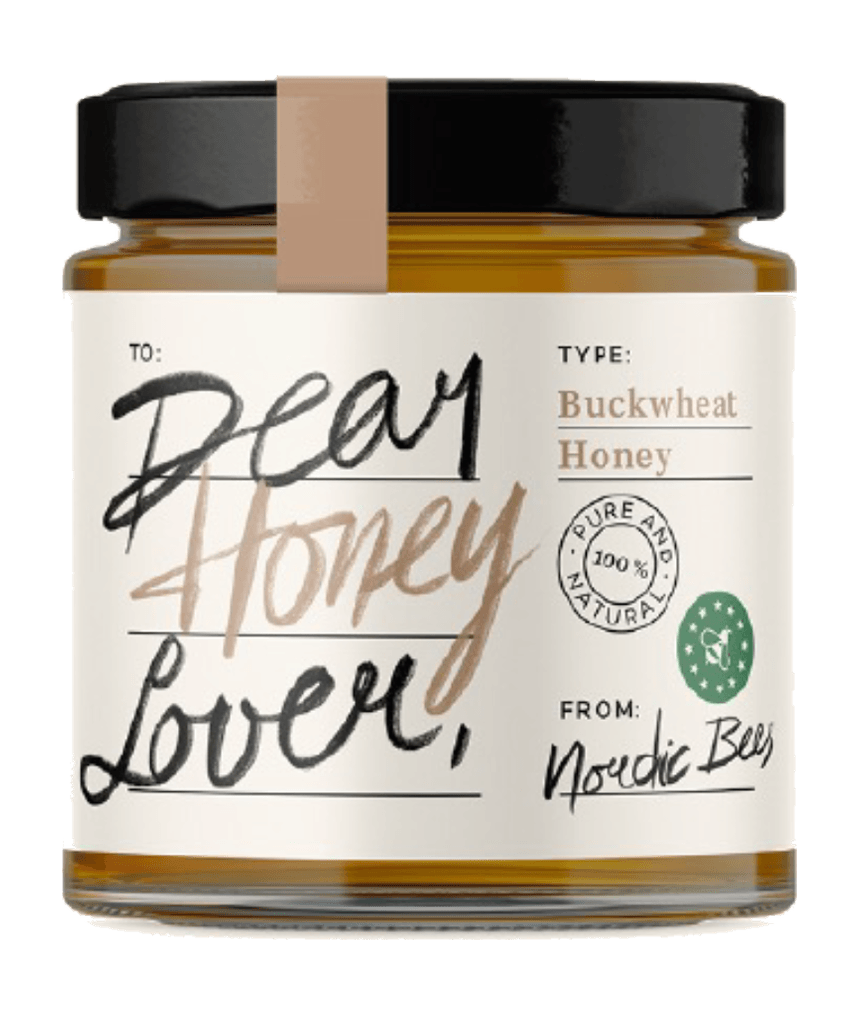
- Type
- Buckwheat blossom honey
- Origin
- Lithuania
- Colour
- Usually deep amber to dark brown
- Taste
- Typically malty and less sweet, with a slightly bitter edge
- Texture
- May set thick, with a coarse, firm grain
- Good with
- Blue cheese on rye, black tea, gingerbread
- Format
- Jar
- Net weight
- 250 g
- Ingredients
- 100% bee honey
- Storage
- Protect from direct sunlight. After opening, store in a cool and dry place.
Net weight, ingredients and storage: as printed on the label.
In the jar
Usually a deep amber to dark brown. The aroma is typically strong and malty, and the taste leans towards molasses and dark malt. The finish is long, with a slight bitter edge.
Cooking and pairing
Put it where its depth can be heard, and use less than you would of a mild honey.
- Over blue cheese on dark rye.
- Stirred into black tea.
- In gingerbread or honey cake, where the flavour carries through baking.
- In a mustard glaze for roast beetroot or sausages.
- On a slice of dark rye with soft cheese.
Setting
It may set at any time. When it does, buckwheat honey usually turns thick, with a coarse, firm grain. This is natural. Soften a set jar in warm water, below 40 °C.
Questions
Is buckwheat honey bitter?
Usually a little, at the very end. The first impression is malty and earthy, with less sweetness than most honeys.
Why is it so dark?
The colour comes from the blossom. Buckwheat honey is typically deep amber to dark brown.
I want something lighter. Where do I go?
Try linden honey, which is typically pale and fresh.
Where it comes from
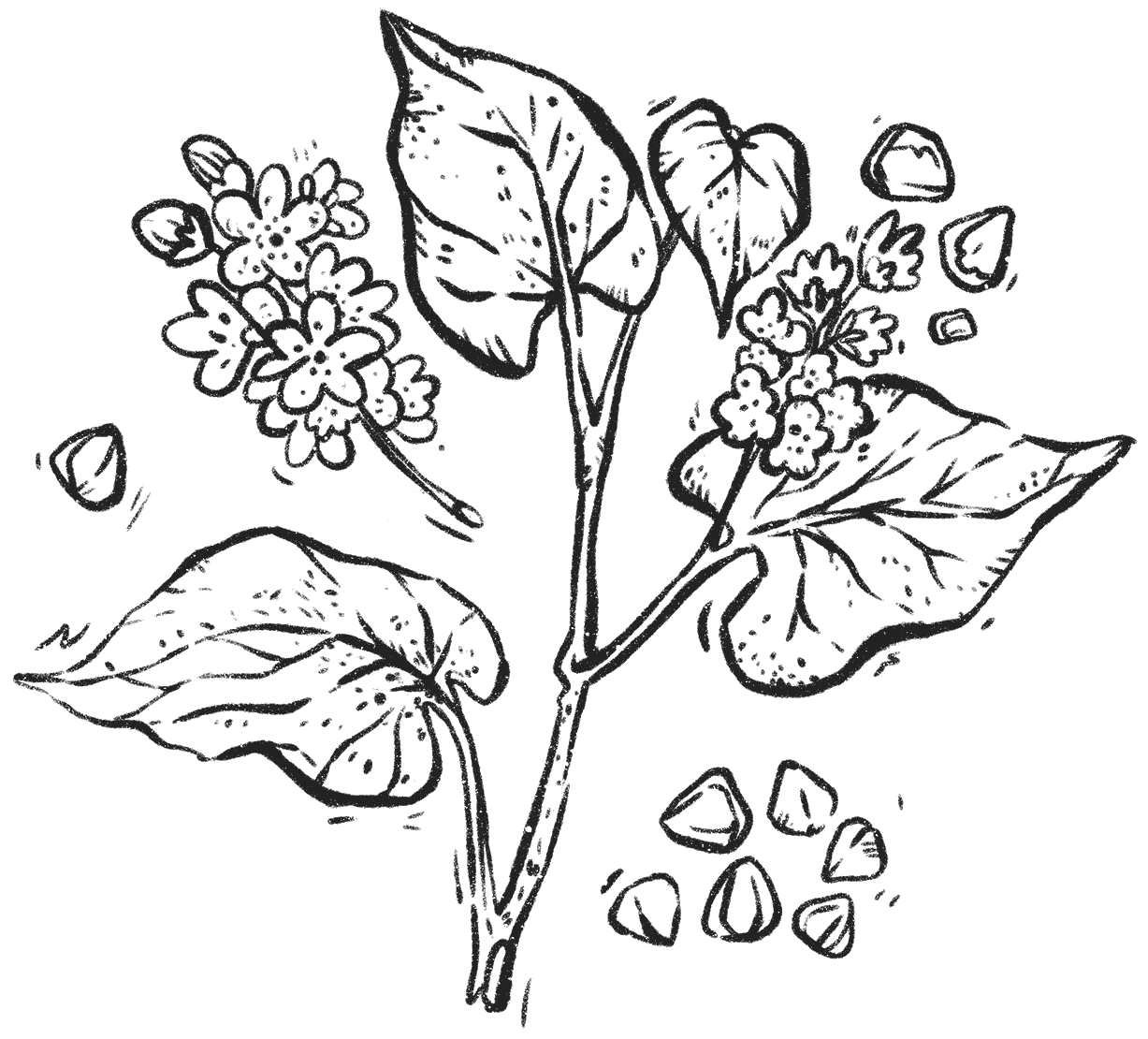
Buckwheat is a summer crop, and it usually flowers in summer. The bees gather its nectar while the fields are in bloom.