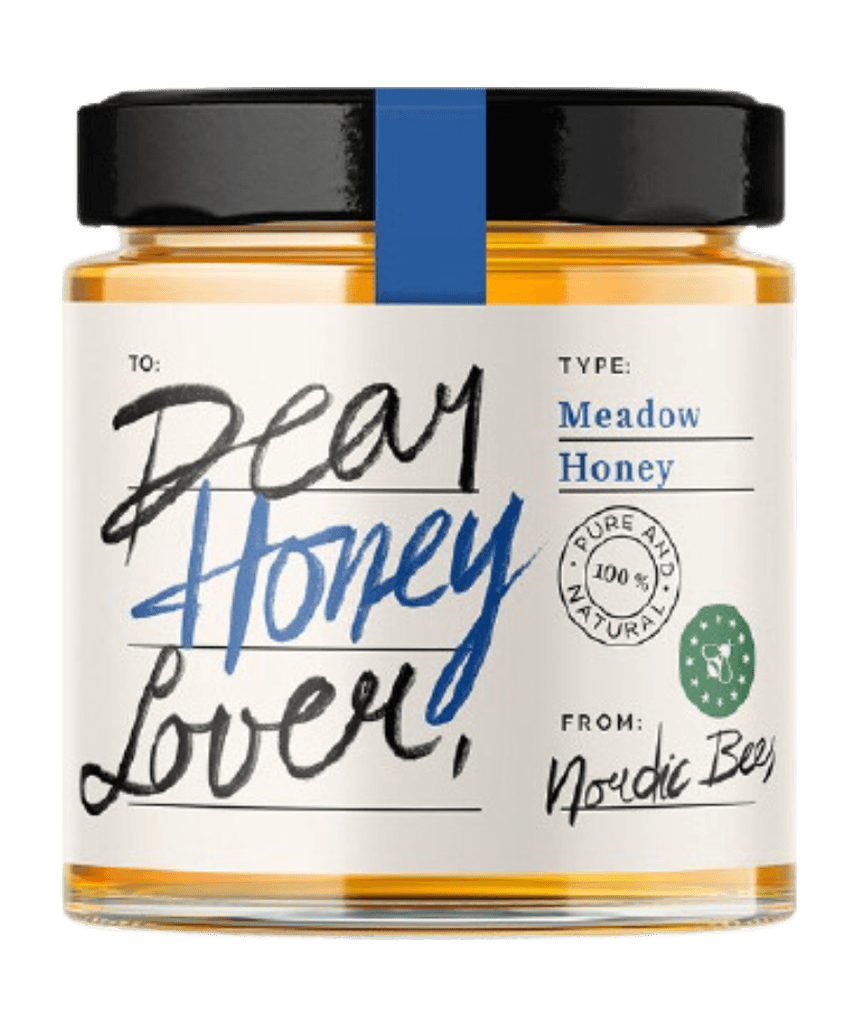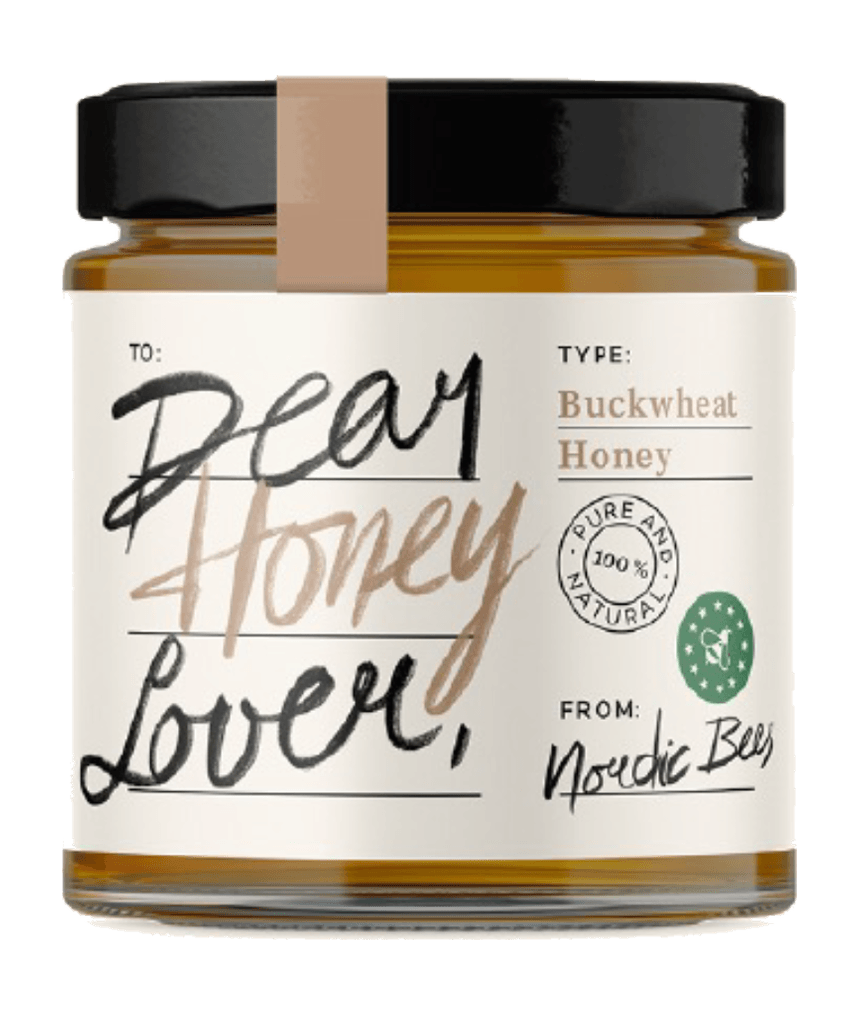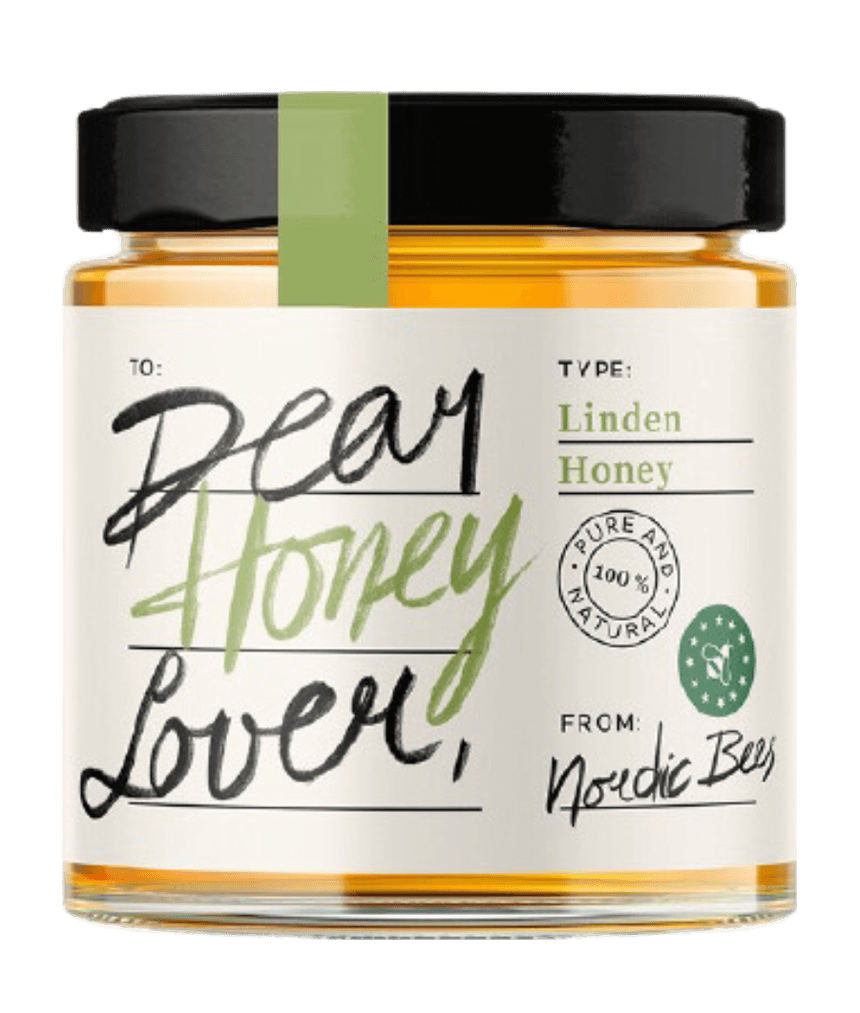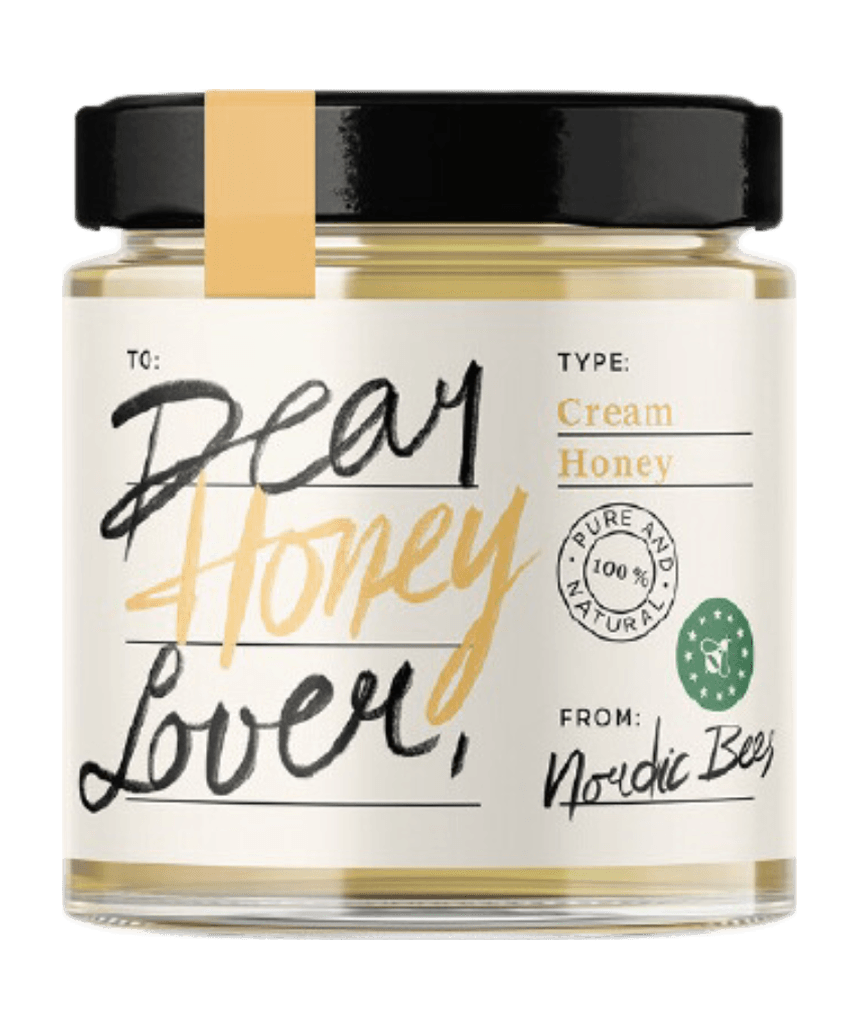
Quick facts
- Type
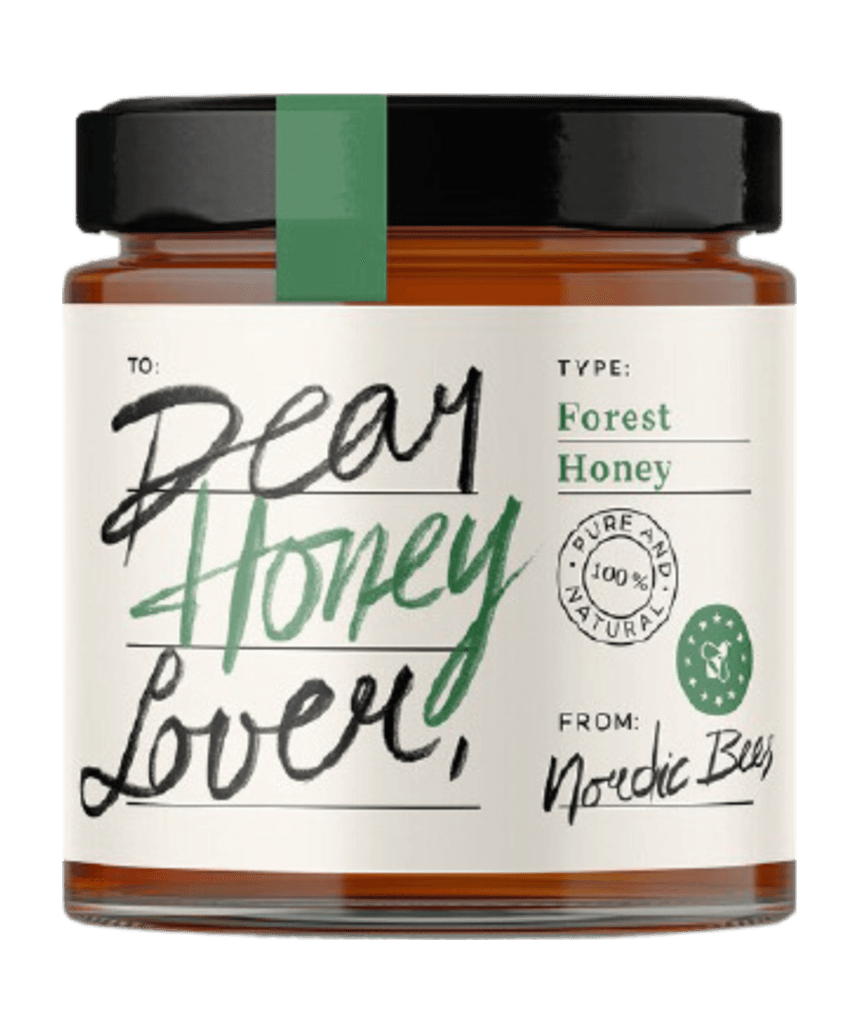
- Forest honey, from the forests of Lithuania
- Origin
- Lithuania
- Colour
- Usually amber to dark
- Taste
- Typically woody and less sweet-floral
- Texture
- Varies; many stay liquid for a long time
- Good with
- Rye bread and mature cheese, porridge, black tea
- Format
- Jar
- Net weight
- 250 g
- Ingredients
- 100% bee honey
- Storage
- Protect from direct sunlight. After opening, store in a cool and dry place.
Net weight, ingredients and storage: as printed on the label.
In the jar
Forest honeys usually run from amber to dark. The aroma is typically woody, sometimes malty, and the taste is rounded rather than floral. Forest honey is a trade name, not a single flower, so the character moves a little from one season to the next.
At the table
- On rye bread with a slice of mature cheese.
- Stirred into porridge with toasted hazelnuts.
- Whisked into a mustard dressing for roast carrots.
- Brushed over roasted pumpkin in the last minutes in the oven.
- Spooned into black tea.
Setting and softening
Forest honeys vary here. Many stay liquid for a long time, while others turn thick or grainy, and neither is a fault. To soften a set jar, stand it in a bowl of warm water, below 40 °C, and stir. Keep water out of the jar and never let it boil.
Questions
Why is it less sweet than other honeys?
Darker honeys typically taste deeper and less sweet-floral, and forest honey usually belongs to that group.
Can I bake with it?
Yes. Its woody depth suits gingerbread, rye loaves and glazes. Honey browns faster than sugar, so keep an eye on the oven.
How is it different from meadow honey?
Meadow honey is usually lighter and more floral. Forest honey is deeper and less sweet.
Keeping it
Protect from direct sunlight. After opening, store in a cool and dry place.